
Important note
Correctional communication rules, approved services, fees, schedules, and mail procedures vary by facility and can change. Confirm current requirements directly with the facility or its official communication provider before sending money, mail, photographs, or gifts. Unchained Connections is a public pen-pal directory; it is not a correctional agency, legal or medical service, or messaging provider, and it cannot guarantee that a service is available or that a message will be delivered.
Because state correctional facilities have distinct policies and procedures, communicating with offenders in multiple states can be challenging. This concise handbook will help you comprehend the essential guidelines for communicating with prisoners in various states.
📬 Ways to Communicate with Inmates
The majority of jails let letters to be sent to inmates. Although rules differ, these are the fundamentals:
Use the full name, ID number, and accurate facility address of the inmate.
Certain states prohibit stickers and glitter and only permit white paper and blue or black ink.
Don’t send money, Polaroids, or offensive material.
All mail is inspected or photocopied by some facilities.
💡 Tip: For a list of acceptable mail formats and postal addresses, visit the website of the particular facility..
- Phone Calls
Usually, inmates are only allowed to make outgoing calls, and they have to:
Use pre-paid accounts or call collect through jail phone companies (e.g., ViaPath / ConnectNetwork (formerly GTL), Securus, ICSolutions).
Be included on a list of authorized contacts.
Observe stringent monitoring guidelines and call duration restrictions.
🚨 Note: You must often set up an account with the specific service provider used by that facility.
- Email / Electronic Messaging
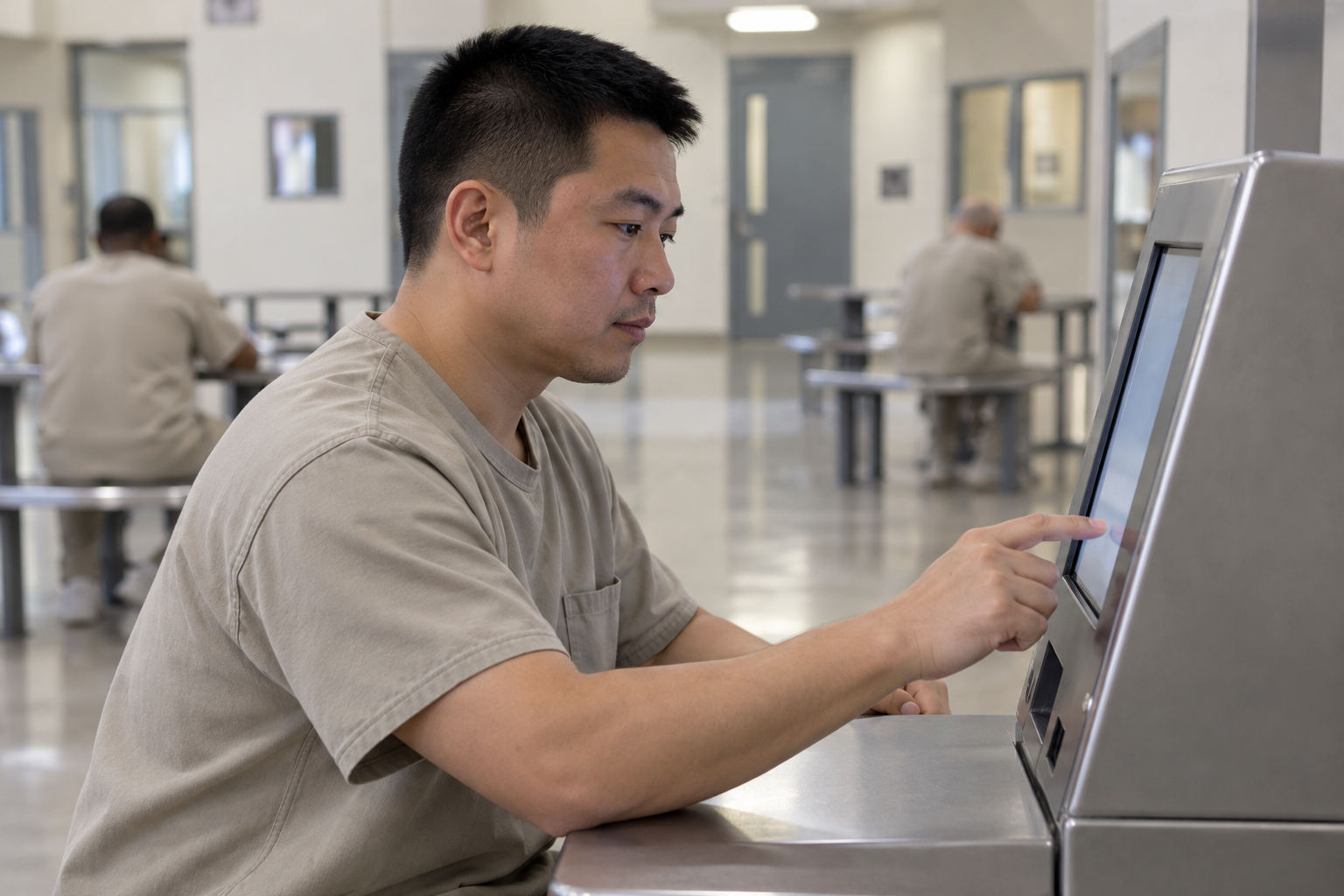
Many states offer secure messaging services like:
JPay
Securus eMessaging
Access Corrections
These are not free and may charge per message or require a virtual “stamp” system.4. Video Visitation / Virtual Visits
Inmate video visitation is becoming more common. Rules vary by state and provider:
You must register and be approved
Visits are usually scheduled in advance
Sessions are recorded and monitored
There may be limits on visit length and frequency📝 Rules and Restrictions to Know by State
Each state has its own Department of Corrections (DOC) with specific communication rules. Here’s what to do:
Look up the inmate’s state DOC website
Find their section on “Inmate Visitation” or “Inmate Communication”
Read the details on:
Approved service providers
Mail restrictions
Visitation hours and procedures
Dress code for in-person visits
🔍 Example:
California DOC uses ViaPath / ConnectNetwork (formerly GTL) for phones and JPay for messaging
Texas DOC uses Securus for both phones and video visits
Florida DOC has strict mail rules (no colored envelopes, no greeting cards)
✅ Final Tips
Always include inmate’s full name and ID number in any communication
Be aware that everything is monitored
Keep messages respectful and within rules
Check for any suspensions or lockdowns that may temporarily halt communicationIf you’d like, I can help you look up the rules for a specific state or facility—just let me know where your contact is located!
Official guidance
- Federal Bureau of Prisons: Communication with people in custody
- Federal Bureau of Prisons: Facility directory
- For state and local facilities, use the correctional agency’s official website and the facility’s current instructions.
This article is general information, not legal, medical, financial, or professional advice.