
Important note
Correctional communication rules, approved services, fees, schedules, and mail procedures vary by facility and can change. Confirm current requirements directly with the facility or its official communication provider before sending money, mail, photographs, or gifts. Unchained Connections is a public pen-pal directory; it is not a correctional agency, legal or medical service, or messaging provider, and it cannot guarantee that a service is available or that a message will be delivered.
Introduction
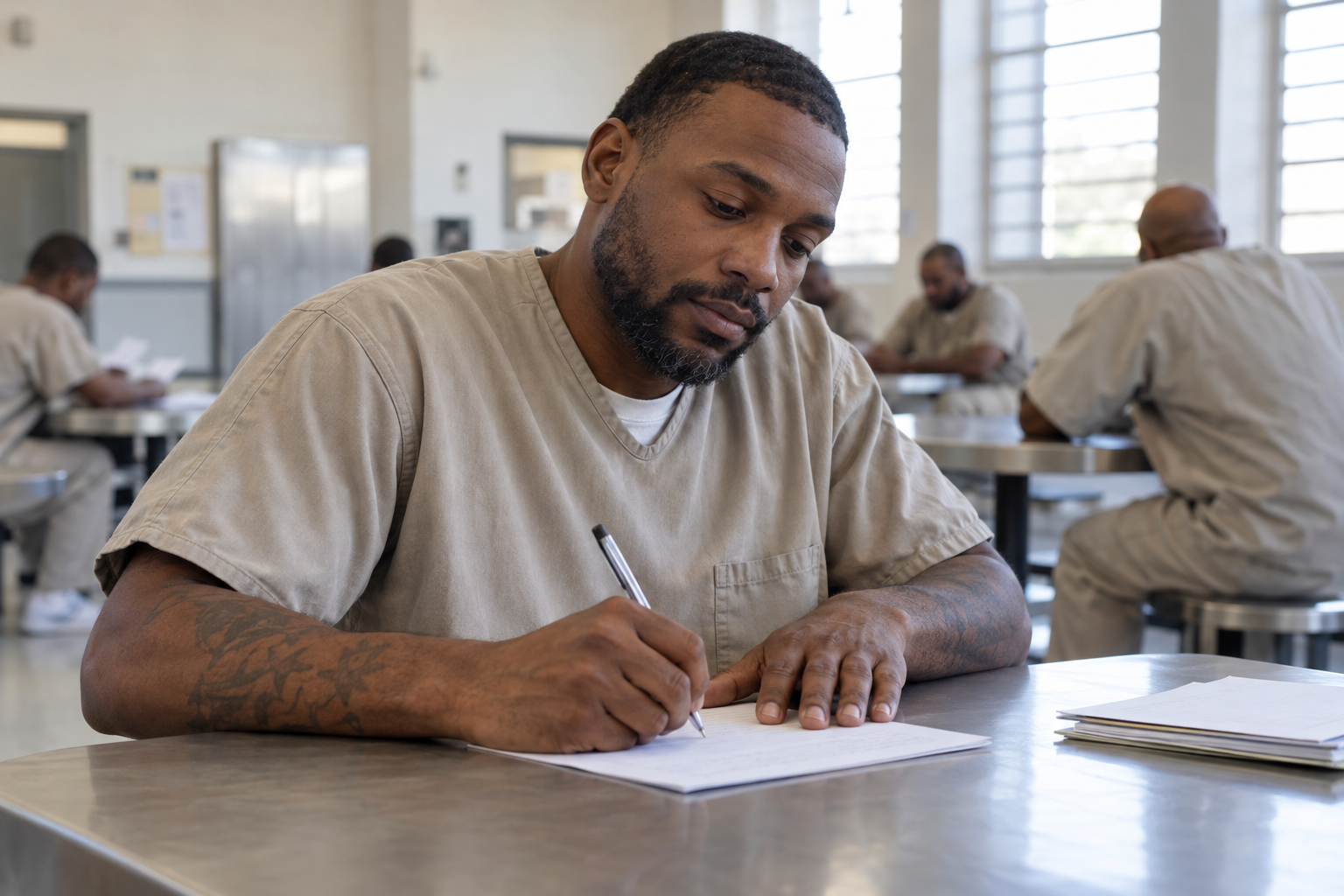
A meaningful act of kindness that can have a long-lasting impact on someone’s life is writing a letter to someone incarcerated in a state jail. Many people feel ignored, alone, or condemned behind the bars of prison. A sincere letter might serve as a reminder that they are still loved, human, and have the capacity to change and develop.
Your words have the power to shine a light on a very dark location, whether you are writing to a friend, relative, or complete stranger. You can write letters that provide support, hope, and a sincere connection by following this approach.
- Understand the Power of Your Letter
Letters are more than simply words on paper in prison; they are a lifeline. Loneliness, sadness, shame, and alienation from the outside world are common problems among those who are confined. A positive, encouraging message can be helpful:
Restore their sense of value
Reduce emotional isolation
Encourage constructive change
Offer assurance and hope.
Your letter could be the reason someone keeps going.
- Check the Prison’s Mail Guidelines
Mail regulations vary from state jail to state prison. Prior to writing, it is essential to:
To find out what is permitted, check the prison’s official website or give them a call.
On the envelope and inside the letter, write the person’s entire legal name, inmate number, and accurate mailing address.
Don’t transmit anything that might be denied, like:
Stickers, glitter, or Polaroid pictures
Gel pen or marker drawings
Content that is explicit
Paper clips, staples, or glued objects
Make sure your letter is clear, concise, and simple to read.
- Begin With Positivity and Presence
Use a kind, upbeat tone to begin. Clearly state your purpose and the message you want your letter to convey. This establishes the message’s overall emotional tone.
For instance:
Hello, Alex. I hope this letter brightens your day a little. I wanted to send you a note to let you know that you are important and not forgotten because I have been thinking about you.
- Write With Compassion, Not Pity
Empathy and encouragement, not remorse or sympathy, should be the main points of your message. Instead of making individuals feel worse, the intention is to improve their mood.
The following are some dos and don’ts:
Do: Remind them of their potential, dignity, and inner power.
Reminding them of mistakes or dwelling on what they are missing should only be done as part of a therapeutic conversation.
Do: Spread resilient and growth-oriented messages.
Avoid using language that comes across as patronizing or unduly "preachy."
- Share Life Updates Mindfully
While discussing the outside world makes the person feel more connected, moderation is essential. Talk about your everyday activities, small pleasures, or thoughts that come to mind.
You may write about:
Nature, the weather, or pastimes
Updates about the family (sensitively)
Things you’re reading or learning
Positive community narratives
Don’t boast or share too much about things they could be missing a lot, such parties or trips.
- Offer Encouraging Words and Affirmations
Your words have the potential to be a strong force for good in an environment where negativity is frequently the norm. You can use the following examples of positive messages:
"Your worst error is not you."
"Every day you persevere is a triumph."
"Your life still has a purpose; this chapter is not the end."
Quotes, brief poems, or lyrics from music that express healing and hope are welcome.
- Ask Thoughtful, Respectful Questions
If they choose to write back, asking questions demonstrates your interest and encourages deep conversation. In calm times, it also provides them with something to think about.
A few instances are:
On difficult days, what keeps you grounded?
Do you have a recollection that brings a grin to your face?
What do you most anticipate happening in the future?
Have you been engaging in any creative endeavors, such as writing or drawing?
Unless you already have a deep, trustworthy relationship, steer clear of queries that are too personal or emotionally charged.
- Respect Boundaries and Maintain Clarity
Be upfront about your intentions if you are not looking for a love connection or are not a romantic partner. Prison relationships can be complicated, so it’s critical to be straightforward and courteous.
Additionally, unless you really want to follow through, don’t make commitments you might not be able to fulfill, like regular visits or financial support.
- End With Hope and Consistency
Remind them that you care at the end of your letter in a positive manner. Inform them whether you intend to write again, and invite them to do so if they so choose.
For instance:
I’m cheering you on at every turn, and you’re not alone. I’ll be writing again soon, so until then, be careful and never give up.
Sample Letter to Someone in State Prison
Dear Marcus,
I thought it would be sufficient justification to write to let you know that you were on my mind today. Although I am aware of how difficult things are for you right now, I hope this letter serves as a reminder of your resilience and your continued value.
I’ve been making an effort lately to be more appreciative of the small things in life, like the sound of rain or the aroma of coffee in the morning. Where you are, is there anything that makes you feel at ease?
One step at a time, Marcus. I came across a quotation that I loved and felt I should share: "You do not have to see the whole staircase, just take the first step." All you have to do is that.
I’m sending you respect, serenity, and strength.
With care, Jordan
Final Thoughts
To truly make an impression, you don’t have to be a writer. For someone incarcerated, your generosity, presence, and readiness to reach out can make all the difference in their life.
Even if your letters are brief, being consistent will help them on their path to recovery. Even if you may never fully understand the impact you have, have faith that it exists.
Thus, pick up a pen, begin writing, and send a letter of optimism.
Official guidance
- Federal Bureau of Prisons: Communication with people in custody
- Federal Bureau of Prisons: Facility directory
- For state and local facilities, use the correctional agency’s official website and the facility’s current instructions.
This article is general information, not legal, medical, financial, or professional advice.