
Important note
Correctional communication rules, approved services, fees, schedules, and mail procedures vary by facility and can change. Confirm current requirements directly with the facility or its official communication provider before sending money, mail, photographs, or gifts. Unchained Connections is a public pen-pal directory; it is not a correctional agency, legal or medical service, or messaging provider, and it cannot guarantee that a service is available or that a message will be delivered.
Introduction
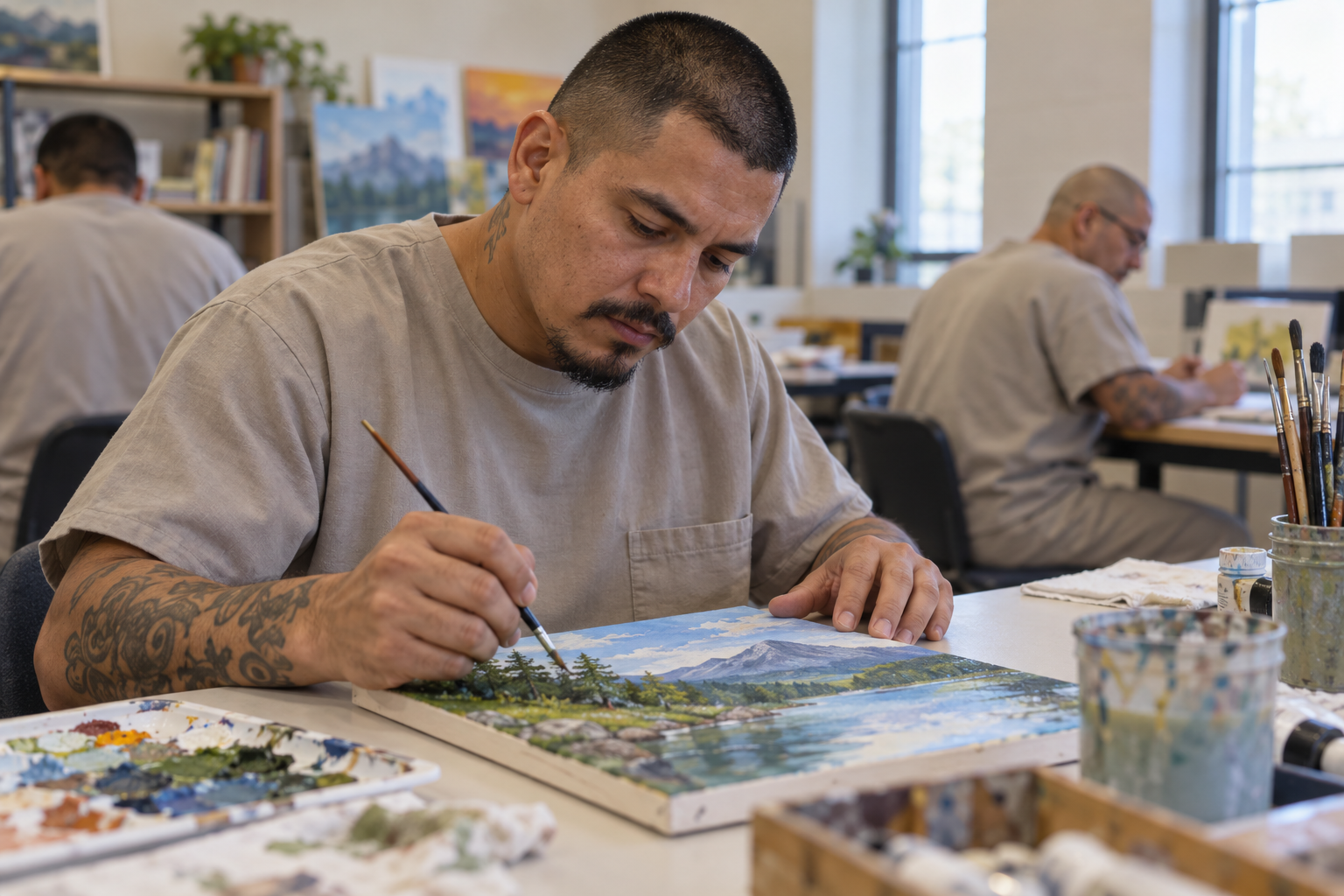
Interest in the transformational potential of art in prison systems has grown, showing that talent and creativity can thrive even in the most constrictive settings. Inmates have the opportunity to enhance their skills, grow personally, and recover emotionally via creative pursuits.
Art as a Path to Rehabilitation
Positive behavioral improvements and rehabilitation have been associated with involvement in art programs in correctional facilities. Inmates who participate in artistic activities have been shown to have lower violation rates and a greater dedication to their academic goals by programs like as New York’s Rehabilitation Through the Arts (RTA). Recidivism rates among RTA members are notably lower than the national norm, at less than 3%. Wikipedia
Notable Initiatives and Exhibitions
Around the world, a number of programs have highlighted the creative abilities of prisoners:Art Zealous+3couriermail+3The New Yorker+3
The Torch Program (Australia): In an effort to end the cycle of incarceration, this initiative involves Indigenous Australian prisoners in artistic and cultural endeavors. The Heide Museum of Modern Art’s "Blak In-Justice" show included pieces from this program that tackled issues of systematic injustice and resiliency. The Guardian
Sing Sing Correctional Facility (USA): Through partnerships with outside artists, Sing Sing’s incarcerated artists have produced shows that showcase their artistic creations and promote a feeling of community. The New Yorker+1The Guardian+1
Personal Stories of Artistic Transformation
Individual narratives further underscore the impact of art in prison:Prison Journalism Project+4prisonartusa.com+4ResearchGate+4
Gary Tyler: Gary Tyler, who was wrongfully incarcerated for over 42 years, learned to quilt while he was there. His elaborate quilts, which combine historical and personal themes, have brought him worldwide fame and won him the Frieze Los Angeles Impact prize. The Guardian
Sherrill Roland: Through the "Jumpsuit Project," Roland turned his experience of being unfairly imprisoned into art by performing in his prison uniform to increase public awareness of the legal system. His art exposes the tenacity of those who have served time in prison and questions conventional wisdom. Architectural Digest
The Role of Art Therapists
In prisons, art therapists are essential in promoting artistic expression. Pioneering art therapist Joyce Laing helped violent criminals at Scotland’s Barlinnie Prison transform themselves and lower their recidivism rates by assisting them in expressing their feelings and experiences through painting. prisonartusa.com+3Wikipedia+3Prison Journalism Project+3
Educational and Exhibitory Platforms
In order to promote conversation and dispel misconceptions about inmates, organizations such as the University of Michigan’s Prison Creative Arts Project (PCAP) give jailed artists a stage on which to display their work. Their yearly exhibition, which showcases a variety of artworks from Michigan’s prisons, is among the biggest of its type. LSA College
Conclusion
In addition to providing a platform for individual expression, the art, creativity, and skill displayed behind prison walls are essential for rehabilitation and reintegration into society. By appreciating and encouraging these creative pursuits, society recognizes the humanity and capacity for transformation of those who are jailed, opening the door for transformational justice procedures.
Official guidance
- Federal Bureau of Prisons: Communication with people in custody
- Federal Bureau of Prisons: Facility directory
- For state and local facilities, use the correctional agency’s official website and the facility’s current instructions.
This article is general information, not legal, medical, financial, or professional advice.